
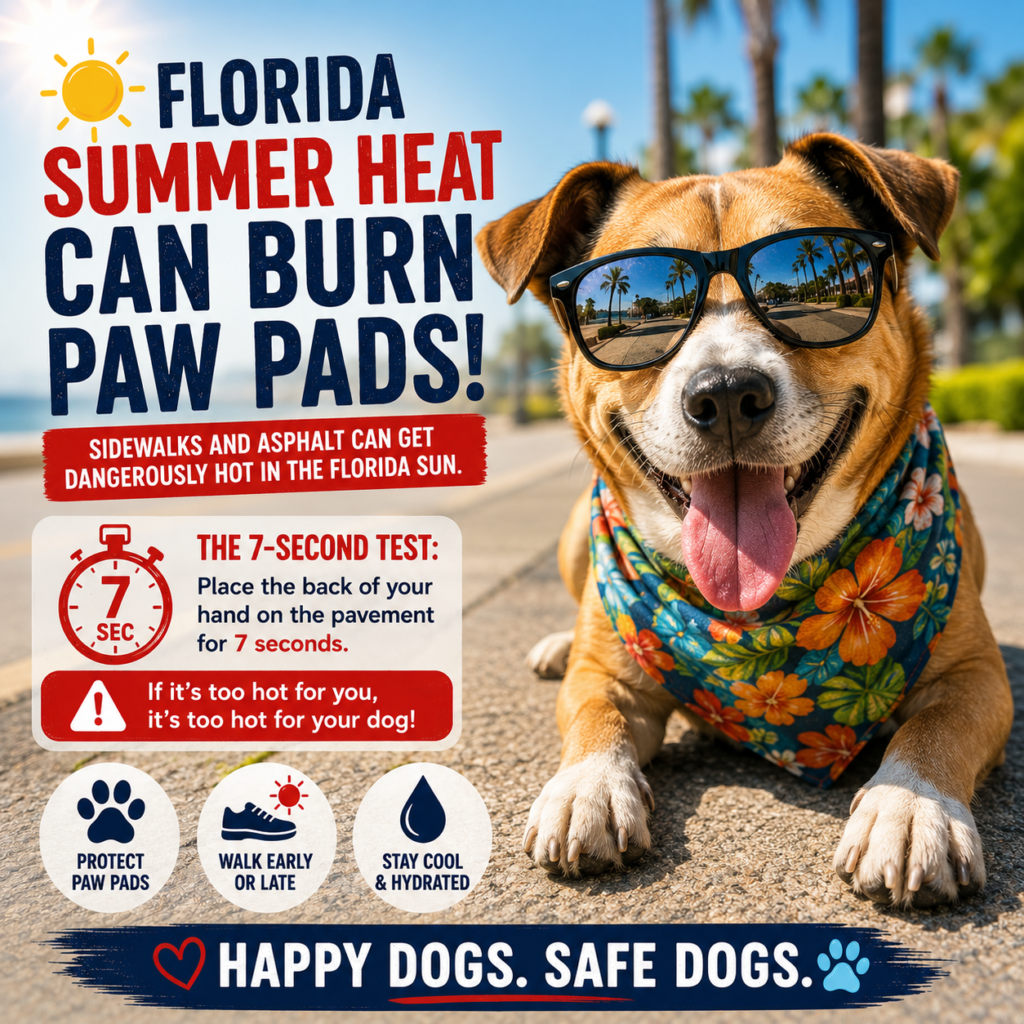
Florida summers are a special kind of hot. The kind where you walk outside and immediately question every life decision that led you there. Unfortunately, our dogs don’t always realize the weather has gone from “nice walk” to “surface of the sun.”
At Wickham Animal Hospital & Boarding, we want to help pet owners recognize the signs of overheating and keep their pets safe all summer long.
The good news? Most heat-related problems are preventable with a little extra caution.
Why Florida Heat Is So Dangerous for Dogs
Dogs do not sweat the way people do — they mainly cool off by panting.
When the air is hot and humid, panting becomes much less effective. That means dogs can overheat quickly, even during short walks or outdoor playtime.
Some pets are especially at risk:
- Bulldogs, Pugs, French Bulldogs, and other flat-faced breeds
- Senior pets
- Puppies
- Overweight pets
- Dogs with heart or breathing problems
- Thick-coated breeds
If your dog looks like they’re wearing a fur jacket in July, they may need extra help staying cool.
Signs Your Dog May Be Overheating
Dogs can’t say, “Excuse me, I believe I’m developing heatstroke”, but they do usually give warning signs before heatstroke becomes severe. Watch for:
- Heavy panting
- Excessive drooling
- Bright red gums
- Weakness or stumbling
- Vomiting or diarrhea
- Glassy eyes
- Difficulty breathing
- Collapse
If your dog suddenly goes from “zoomies” to “absolutely not,” it’s time to cool them down and contact your veterinarian.
The Pavement Is Not Your Dog’s Friend
Florida pavement gets HOT, like “could probably cook bacon” hot.
A common mistake pet owners make is assuming if the air temperature feels okay, the ground must be fine too. Asphalt and sidewalks heat up FAST and can burn paw pads in seconds. If you’ve ever felt your steering wheel in July and questioned your life choices, imagine walking barefoot on the parking lot.
If the pavement could double as a fajita skillet, it’s too hot.
Try the “7-second test”:
Place the back of your hand on the pavement for 7 seconds. If it’s too hot for your hand, it’s too hot for your dog’s paws.
To help protect paws:
- Walk early in the morning or later in the evening
- Avoid mid-day walks
- Stick to grassy areas whenever possible
- Bring water during walks
Please Don’t Leave Pets in Cars
We know this gets repeated every summer, but it’s because it’s incredibly important.
A parked car in Florida can become dangerously hot within minutes — even with the windows cracked.
If your pet can’t safely come inside with you, it’s safest to leave them home in the air conditioning.
Water Is Your Best Friend
Always make sure your dog always has access to fresh, cool water and access to shade during outdoor activities. Limit strenuous exercise during the hottest parts of the day and keep outdoor activities shorter when temperatures are extreme.
For dogs that love swimming, make sure to supervise them around pools and/or lakes and prevent them from drinking pool or ocean water. Consider a life jacket for boating trips.
What To Do If Your Dog Overheats
If you suspect overheating, contact your veterinarian immediately and do the following:
- Move your dog to a cool or shaded area immediately
- Offer cool water
- Wet them with cool (not ice-cold) water
- Use fans or air conditioning
Avoid ice baths or freezing water, as rapid cooling can sometimes make things worse.
Final Thoughts
Florida summers can be rough on pets, but a little preparation can prevent serious emergencies.
The goal is simple: Keep the paws unburned, the tongues happily panting, and the emergency vet visits to a minimum.
