
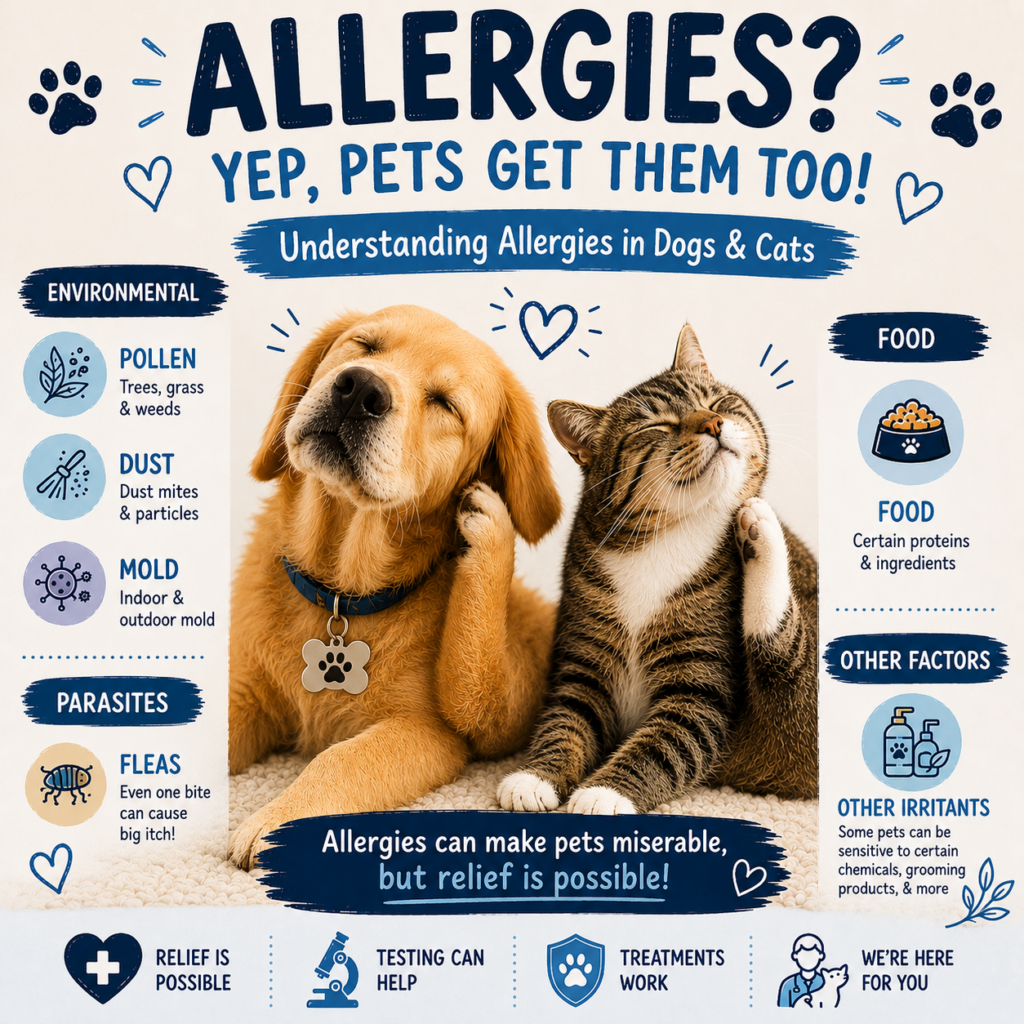
Just like humans, dogs and cats can have allergies too — except instead of buying tissues in bulk, pets usually express their suffering by scratching nonstop, licking their feet like they’re made of peanut butter, and chewing on themselves with the determination of a dog working on a squeaky toy. Here in Florida where “allergy season” basically lasts 11.5 months out of the year, allergies are one of the most common things we see in both dogs and cats.
Common Types of Allergies
- Seasonal & Environmental Allergies
These are caused by things like pollen, grass, mold, dust, weeds, and household irritants. Common signs include: -
-
- Paw licking or chewing
- Ear infections
- Scratching
- Red skin
- Hair loss
- Scooting
-
- Food Allergies
Some pets develop allergies to ingredients in their food, like chicken, beef, dairy or wheat. Fun fact: pets can suddenly become allergic to food they’ve eaten
for years. Food allergies often cause: -
-
- Chronic itching
- Ear infection
- Paw chewing
- Skin infections
-
How We Treat Allergies
- Over-the-Counter (OTC) Allergy Medications — These can help mild allergy cases, but always check with your doctor before giving medications at home.
- Cytopoint Injections — An injection that helps stop the itch signal itself. It works quickly and lasts 4-6 weeks.
- Apoquel Tablets — A daily prescription medication that helps control itching and inflammation fast, especially for pets with moderate to severe allergies.
- Medicated Shampoos & Wipes — These help to remove allergens, soothe skin, and treat bacteria and yeast.
When Allergies Get More Serious
Severe allergies can lead to:
- Skin infections
- Ear infections
- Hot spots
- Open sores
When that happens, pets may also need steroids to calm severe inflammation, antibiotics for infections, or additional medications to get things under control. The goal is always to stop the itch cycle and keep your pet comfortable long-term.
When Should You Call the Vet?
It’s time for an exam if your pet has:
- Frequent scratching or licking
- Recurring ear infections
- Red or irritated skin
- Hair loss
- Chewing at paws
- Skin odor or hot spots
If your pet is scratching, licking, or chewing like it’s a full-time job they take very seriously, allergies may be the culprit. If you think your pet might be suffering from allergies, please call or text our office at 321-724-0234 to schedule an appointment!
