Senior Status Unlocked: What Changes Once Your Pet Turns 7?
Your pet may still race to the food bowl, chase toys, and pretend not to hear you when it is time for a bath—but once many dogs and cats turn 7, their healthcare needs begin to change. Pets age faster than people, and conditions such as kidney disease, high blood pressure, arthritis, and dental disease can develop without obvious symptoms. Pets—especially cats—are also experts at hiding discomfort.
Do not fret! “Senior” does not mean old, frail, or ready for a rocking chair. It simply means it is time to monitor their health a little more closely so we can identify changes early and help keep them as happy and comfortable as possible.Because health can change more quickly, we also recommend wellness exams every six months once your pet earns their senior badge.
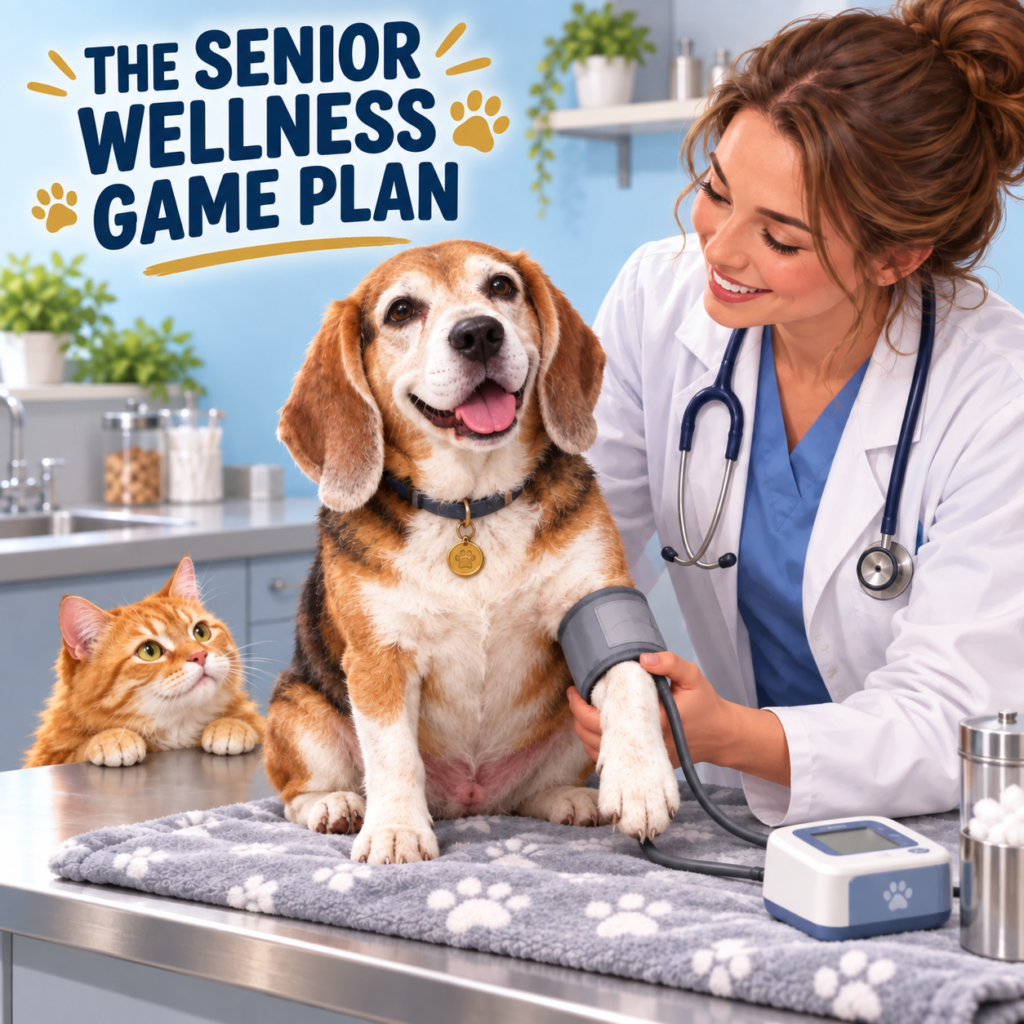
The Senior Wellness Game Plan
Once your pet turns 7, in addition to the standard nose-to-tail examination done at annual exams, we recommend adding the following screenings to their regular wellness care:
- Bloodwork: Because Fur Doesn’t Tell the Whole Story
Bloodwork evaluates blood cells and organ function, including the kidneys and liver. It may identify changes before symptoms appear and provides a healthy baseline for future comparison. - Blood Pressure: Not Just a Human Problem
High blood pressure can affect the kidneys, heart, eyes, and brain —often without causing obvious symptoms early. Testing is quick, noninvasive, and generally well tolerated—even by pets who believe the blood-pressure cuff is highly suspicious. - Nu.Q® Cancer Screening: An Extra Set of Eyes for Senior Dogs
For senior dogs, we also recommend Nu.Q cancer screening. This simple blood test may detect changes associated with certain cancers, including lymphoma and hemangiosarcoma.
*Nu.Q is a screening tool, not a cancer diagnosis, and does not replace an examination or routine bloodwork.
Senior Clues: What Is Your Pet Trying to Tell You?
You know your pet better than anyone. Please let us know if you notice changes such as:
- Drinking or urinating more
- Gaining or losing weight
- Eating more, eating less, or becoming unusually picky
- Difficulty jumping, climbing stairs, or getting comfortable
- Sleeping more or losing interest in favorite activities
- Coughing, panting, or tiring more easily
- New lumps or bumps
- Changes in behavior or bathroom habits
- Restlessness, confusion, or increased nighttime activity
Even small changes can provide important clues. Never assume something is happening “just because they are getting older.”
A Little Testing Can Make a Big Difference
The goal of senior screening is not to go looking for bad news. It is to catch changes early, when we may have more options to protect your pet’s comfort and quality of life. These screenings help us establish what is normal, monitor trends over time, and create a care plan specifically for your pet.
More Comfort, More Adventures, More Treats!
Getting older is a normal part of life—not a disease. With preventive care, regular activity, appropriate nutrition, dental care, and early attention to health changes, senior pets can continue enjoying many happy years with their families.
If your pet is 7 years or older, call or text us at 321-724-0234 to schedule a senior wellness examination or ask about annual bloodwork, blood-pressure screening, and Nu.Q cancer screening for senior dogs.
After all, growing older may be mandatory—but acting their age is completely optional!
